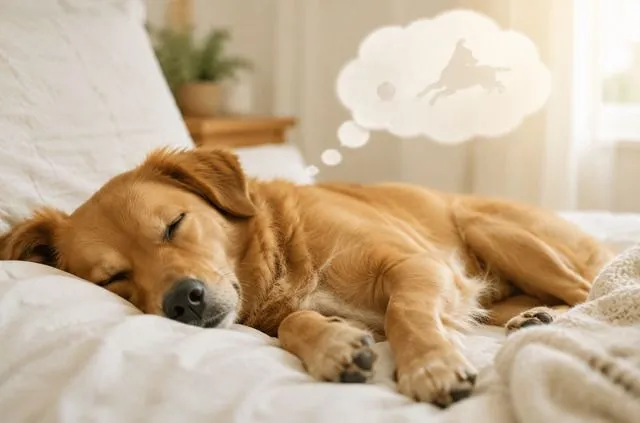
You are watching your dog sleep when their paws suddenly begin to twitch. Their nose wiggles, their eyes move beneath the lids and a tiny bark slips out. For a few seconds, it looks as though they are chasing something only they can see.
Quick answer: Your dog may appear to dream a lot because dogs sleep for many hours and repeatedly move through sleep stages, including rapid eye movement (REM) sleep. During this stage, brief paw twitches, whisker movements, soft barks and quiet whimpers can be normal. Puppies and senior dogs may appear especially active while sleeping. What matters most is whether the movements are brief and relaxed or prolonged, violent and followed by confusion.
In most cases, an active sleeper is not a sick dog. Still, a sudden change in sleep behaviour deserves attention, particularly when it comes with pain, breathing trouble, weakness or unusual behaviour while awake. This guide explains what normal dog dreams can look like, why some dogs seem to dream more than others and when it is sensible to speak with your vet.
Do Dogs Really Dream?
Dogs cannot tell us what they saw in a dream, so nobody can know the exact storyline playing in a sleeping dog’s mind. However, dogs have sleep cycles that include REM sleep, the stage strongly associated with dreaming in people. During REM sleep, the brain is active while most large muscles remain relaxed.
That is why your dog may make small movements without getting up and acting them out. You might see their eyes moving under closed lids, a paw making a running motion or an ear flicking as if it heard a sound. These signs suggest an active sleep stage; they do not prove whether your dog is dreaming about you, a favourite walk or the neighbour’s cat.
Why Does My Dog Dream So Much?
Your dog may not necessarily dream more than other dogs. You may simply notice their dreams because they sleep nearby, make obvious movements or share your bedroom. Several factors can make dream-like behaviour easier to see.
Dogs sleep for a large part of the day
Adult dogs commonly sleep for much of each 24-hour period, while puppies and older dogs often need even more rest. More time asleep creates more opportunities for you to notice twitching, noises and eye movements.
Dogs have repeated sleep cycles
Sleep is not one unchanging state. A dog moves between lighter and deeper stages. Dream-like movements may appear during an active stage, stop when the dog shifts position and return later in the same nap.
Puppies can look very active in sleep
A young puppy’s nervous system is still developing, and puppies are processing a world full of new sights, smells, people and skills. They also sleep for long periods. Together, those factors can make a puppy seem like a particularly busy dreamer.
If your young dog is vocalising because they are awake, unsettled or lonely rather than asleep, the advice in this guide to helping a puppy who cries at night may be more relevant.
Senior dogs may twitch more noticeably
Older dogs can also show more visible sleep movements. Age-related changes may affect sleep patterns, and senior dogs tend to rest more. A little extra twitching can be harmless, but a major change in an older dog’s sleep, awareness or daytime behaviour should be discussed with a vet.
You sleep close enough to notice
A dog who sleeps beside your bed or at your feet is easy to observe. This closeness can be comforting for both of you, and it is one small example of how pets can improve their owners’ lives. It can also make every sleepy squeak sound much louder at two in the morning.
What Does Normal Dog Dreaming Look Like?
Normal dream behaviour is usually brief, gentle and intermittent. Your dog should otherwise look comfortable and breathe without obvious effort.
- Small paw flicks or short running motions
- Whisker, nose, lip or ear twitching
- Eyes moving beneath the eyelids
- Soft yips, muffled barks or quiet whimpers
- A brief tail wag
- Small changes in breathing speed during the episode
- Movements that stop on their own after a short time
- Waking normally and behaving as usual afterwards
Dogs also adopt many surprising resting poses. Side sleeping often makes little paw movements particularly easy to see, but curled, belly-up and stretched-out dogs may dream too. Our guide to common dog sleeping positions explains what these everyday poses may mean.
Why Is My Dog Twitching in Sleep?
Dog twitching in sleep is often a normal part of an active sleep stage. The brain usually limits large muscle movement during REM sleep, but small signals can still reach the paws, face, tail and skin. Your dog may look as if they are running even though they remain safely asleep.
Puppies and senior dogs may twitch more than middle-aged dogs. An occasional whole-body startle can also happen when a dog is falling asleep, much like the sudden falling sensation some people experience.
Normal twitching is generally loose, brief and limited to small parts of the body. More concerning movement may be stiff, violent, prolonged or impossible to interrupt. If you are unsure, record the episode from a safe distance. A video and an accurate note of its duration can help your vet tell the difference between sleep movement and a possible medical event.
Why Do Dogs Bark in Their Sleep?
If you have wondered why dogs bark in their sleep, the simplest explanation is that vocalisation can occur alongside an active sleep stage. A dog may make tiny woofs, squeaks, growls or yips without waking. The sound does not automatically mean the dream is frightening.
Watch the full body rather than judging the bark alone. A relaxed jaw, loose limbs and brief noises are usually reassuring. Repeated distress, frantic movement, difficulty breathing or an inability to settle after waking deserves a closer look.
Try not to wake a barking dog by touching their face. A startled dog may react before recognising you. If you need to wake them, stand a little distance away and gently say their name.
Whimpering in Sleep: Is My Dog Having a Nightmare?
Whimpering in sleep can sound upsetting, but one soft whine is not proof of a nightmare. As with barking and twitching, dog whimpering in sleep may simply accompany normal REM activity.
It is possible that dogs have pleasant and unpleasant dream experiences, but their sounds do not let us interpret the content reliably. A quiet whimper with relaxed muscles is very different from a dog who wakes crying, limps, guards part of the body or cannot become comfortable.
If your dog seems unwell rather than merely sleepy, focus on their overall condition. Check appetite, energy, mobility, toileting and breathing. You can also follow these gentle steps for comforting a sick dog while arranging suitable veterinary advice.
Should I Wake My Dog From a Dream?
Usually, no. Letting a comfortably sleeping dog wake naturally is the safest and least disruptive choice. Rest is important, and touching a dreaming dog near the head may startle them.
If the dream noises are waking the household or the dog seems distressed, use your voice first. Say their name softly or make a gentle everyday sound from a short distance away. Give them a moment to orient themselves before reaching towards them.
Do not restrain a dog who may be having a seizure, and do not put your hands near their mouth. Move nearby objects out of the way if you can do so safely, time the episode and contact a veterinary professional.
Dreaming or Seizure: How Can You Tell the Difference?
It is not always possible to distinguish dreaming from a seizure at home, and a video is often useful to a vet. The following comparison offers general clues, not a diagnosis.
| Feature | More consistent with dreaming | More concerning for a seizure or other event |
|---|---|---|
| Movement | Small, loose paw or facial twitches | Rigid body, violent repeated jerking or strong paddling |
| Duration | Usually brief and stops naturally | Prolonged, repeated closely together or increasing in intensity |
| Response | May wake to a familiar voice | Cannot be roused during the event |
| Saliva and toileting | Usually no heavy drooling or loss of bladder/bowel control | Heavy drooling, urination or defecation may occur |
| Afterwards | Wakes and behaves normally | Confusion, pacing, temporary vision problems, weakness or extreme hunger |
Seek urgent veterinary help for a first suspected seizure, an episode lasting several minutes, repeated seizures close together, breathing trouble, injury, collapse or failure to recover normally. Follow your vet’s emergency instructions if your dog already has a diagnosed seizure condition.
Does My Dog Sleep Too Much?
If you are asking, “Does my dog sleep too much?”, compare the pattern with what is normal for that individual dog. Age, breed, exercise, health, weather and household routine all influence rest.
How much sleep do dogs need by age?
| Life stage | Typical general pattern | What to watch |
|---|---|---|
| Young puppies | Often 18–20 hours across night sleep and daytime naps | They should still wake to eat, play, toilet and interact |
| Adult dogs | Often around 12–14 hours, with wide individual variation | A sudden increase or drop matters more than one exact number |
| Senior dogs | Often 12–15 hours or more, depending on health and activity | Watch for pain, confusion, appetite changes and altered night-time sleep |
These are broad guides rather than strict targets. Speak with your vet if your dog suddenly sleeps much more, is difficult to wake, loses interest in favourite activities or shows appetite loss, weakness, vomiting, diarrhoea, coughing or breathing changes.
Sleep also needs context. A relaxed dog who enjoys food, walks, play and social contact may simply love a good nap. Looking at wider signs that a dog is happy gives a more useful picture than counting hours alone.
Why Is My Dog Not Sleeping at Night?
A dog not sleeping at night may have a routine problem, but discomfort and illness must also be considered. Common possibilities include:
- Too little physical or mental activity during the day
- A late nap that reduces night-time sleepiness
- Needing to urinate or pass stool
- Noise, light, heat or an uncomfortable bed
- Separation distress, fear or a recent household change
- Itching, pain, nausea or breathing discomfort
- Age-related confusion in a senior dog
- Medication side effects or an underlying health condition
Dog restless at night
A dog restless at night may pace, pant, repeatedly change position or ask to go outside. One unsettled evening can follow an unusual day, but persistent restlessness should not be dismissed. Pain, anxiety, digestive trouble, urinary problems and breathing difficulty can all prevent comfortable sleep.
Changes in posture may offer useful clues. A dog who suddenly remains upright, cannot lie flat or adopts an unfamiliar position while breathing heavily needs prompt veterinary attention. See our guide to dog sleeping positions when sick for the accompanying signs that matter most.
My dog keeps waking me up at night
If your dog keeps waking you up at night, note the time and what happens next. Do they need the toilet, react to a sound, seek reassurance, appear hungry or pace without settling? A short sleep diary can reveal a pattern.
Provide a comfortable, quiet sleep space, keep meals and toilet breaks consistent, and include suitable daytime exercise. Some dogs feel safest in enclosed places and may choose to sleep under the bed. Others prefer closeness and regularly sleep at their owner’s feet. A familiar preference is usually less concerning than a sudden behavioural change.
Do not use extra exercise as the only answer if your dog seems sore, breathless, confused or unwell. Those signs need a veterinary assessment.
Dog Snoring: Normal Noise or a Warning Sign?
Dog snoring happens when air passing through relaxed upper-airway tissues creates vibration. A light, familiar snore can be harmless, especially when it changes with sleeping position. Short-nosed breeds may snore more because of their airway anatomy.
Snoring deserves veterinary attention when it is new, suddenly louder or accompanied by:
- Struggling or working hard to breathe
- Gasping, choking or repeated pauses
- Open-mouth breathing at rest
- Poor exercise tolerance
- Wheezing or frequent coughing
- Blue, grey or very pale gums
- Collapse or extreme distress
Blue or grey gums, collapse and obvious breathing distress are emergencies. Seek veterinary help immediately.
Can dogs have sleep apnoea (sleep apnea)?
Yes. If you are wondering, “Can dogs have sleep apnea?”, dogs can experience sleep-related breathing obstruction. However, owners should not diagnose sleep apnoea from snoring alone. Short-nosed dogs, dogs with obstructive airway disease and overweight dogs may be at greater risk of breathing problems during sleep.
If you notice repeated pauses in breathing, gasping, choking or restless sleep, record a video and arrange a vet visit. Your vet may assess the nose, soft palate, throat, body condition and heart and lung health. Cornell University’s veterinary guidance lists snoring, wheezing, laboured breathing, gagging and reduced exercise ability among signs associated with brachycephalic obstructive airway syndrome.
Why Do Some Dogs Sleep With Their Eyes Open?
A dog may occasionally sleep with part of the eye visible. You might be seeing the third eyelid, or the ordinary eyelids may simply be slightly open while the dog rests. Eye movement during REM sleep can make the sight look more dramatic.
If your dog wakes easily and the eyes look normal afterwards, this may be harmless. Redness, discharge, cloudiness, squinting, pawing at the eye or an inability to close it properly needs veterinary attention. Read more about why dogs sometimes sleep with their eyes open.
How to Help Your Dog Sleep More Comfortably
- Keep a steady routine. Regular meals, walks, play and toilet breaks help your dog know when it is time to settle.
- Offer suitable daytime activity. Match exercise to your dog’s age, breed and health, and include sniffing, training or food puzzles for mental engagement.
- Create a calm sleep area. Choose a quiet, draught-free spot with a supportive bed and easy access to water.
- Allow safe choice. Some dogs like closeness; others prefer a quiet corner. Let your dog select a safe resting place when practical.
- Avoid disturbing normal dreams. Use your voice rather than touching a twitching or vocalising dog.
- Track meaningful changes. Note sleep times, restlessness, snoring, appetite, medication and unusual behaviour.
- Support healthy social bonds. Calm, predictable family interactions can help a dog feel secure. Pets can also bring people together, as explored in this article on how pets may improve a relationship.
When Should I Call a Vet?
Arrange veterinary advice if dreaming-like behaviour is new, increasing or accompanied by a change in your dog’s health or personality.
Contact your vet promptly if your dog:
- Has repeated episodes that look different from ordinary twitching
- Wakes confused, weak, frightened or unable to walk normally
- Is unusually sleepy, difficult to wake or no longer interested in normal activities
- Cannot settle because of pacing, panting, pain or coughing
- Has new or worsening snoring, breathing pauses or gasping
- Shows changes in appetite, drinking, toileting or behaviour
Seek emergency veterinary care if your dog:
- Is struggling to breathe or breathing with obvious effort
- Has blue, grey or extremely pale gums
- Collapses or cannot stand
- Has a prolonged seizure or several seizures close together
- Does not recover normally after an episode
- Appears severely distressed or unresponsive
Frequently Asked Questions
Yes. Dogs pass through active sleep stages regularly, so dream-like twitching or soft noises may happen every night. It is usually normal when episodes are brief and your dog wakes and behaves normally.
You may notice more movement after a stimulating day, but movement alone cannot reveal what your dog is dreaming about. A tired dog may also sleep for longer, giving you more chances to observe an active sleep stage.
Small vocalisations can occur during an active sleep stage without fully waking the dog. A brief, muffled bark with relaxed movement is usually less concerning than persistent distress or breathing difficulty.
Not necessarily. Brief whimpering can accompany normal dreaming. Pain is more likely when the dog cries while awake, guards an area, limps, struggles to change position or cannot settle comfortably.
It is better to let them sleep. If you need to wake your dog, say their name gently from a short distance. Touching the face or paws may startle a sleeping dog.
Dogs probably have varied dream experiences, but we cannot know the exact content from a bark or whimper. Focus on whether your dog looks physically comfortable and returns to normal after waking.
Dogs can have sleep-related airway obstruction. Repeated breathing pauses, gasping, choking, laboured breathing or poor exercise tolerance need veterinary assessment, particularly in short-nosed breeds.
Seek urgent advice when movement is prolonged or violent, episodes repeat close together, the body becomes rigid, your dog cannot be roused, breathing is affected or they remain confused or weak afterwards.
Final Thoughts
A dog who twitches, softly barks or gives a tiny sleepy whimper is often moving through a normal active stage of sleep. Puppies, senior dogs and dogs who rest close to their people may simply make those moments easier to notice.
Do not judge one movement or sound in isolation. Look at duration, breathing, body tension, recovery and your dog’s behaviour while awake. Familiar, brief and relaxed dream activity is usually reassuring. A sudden change paired with breathing trouble, pain, confusion or weakness is a reason to call your vet.
Medical note: This article provides general information and cannot diagnose your dog. Contact a qualified veterinarian if you are worried about a change in sleep, movement, breathing or behaviour.
Veterinary Sources
- American Kennel Club: Why Do Dogs Twitch in Their Sleep?
- American Kennel Club: Why Do Dogs Sleep So Much?
- Cornell University College of Veterinary Medicine: Brachycephalic Obstructive Airway Syndrome