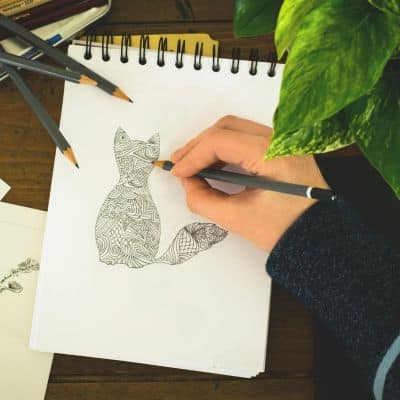
Most people consider doodling as mere incidental drawings made while thinking about something else. They believe that doodling is a sign of being bored or uninterested in what you are doing, but little do you know that the lines on your page, or doodles, have a lot of meaning!
Doodling doesn’t happen by accident; doodling is actually a conscious decision to actively think about something and turn thoughts into actual physical representations. Doodling can help improve focus, memory, and encourage more creativity.
The purpose of this article is to clearly define the purpose of doodles – what they mean as well as how they are important – and to demonstrate that something as simple and unimportant as doodle could help create ideas or improve cognitive function.
Doodler Meaning
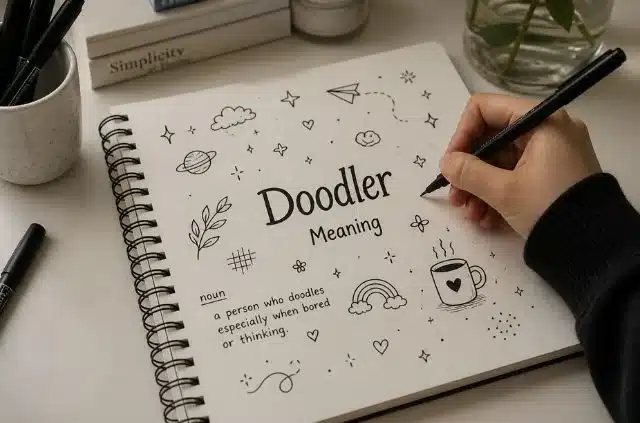
A doodler can usually be described as someone who is to mindlessly draw (doodle) on paper while they are doing something else (like talking on the telephone, in a meeting, etc.). Many people associate doodleness with being disengaged from the present time because they are on autopilot.
But does doodleness really mean that you are disengaged?
A doodle is more than just a sign of being disengaged from the present moment. Doodles can actually be a vehicle for carrying out thoughts, being engaged in the present, and creating visual representations of thoughts. When you doodle, you may not know it, but your doodles convey creativity, focus, and thought processes that are occurring outside of your awareness.
What is Doodle Art?
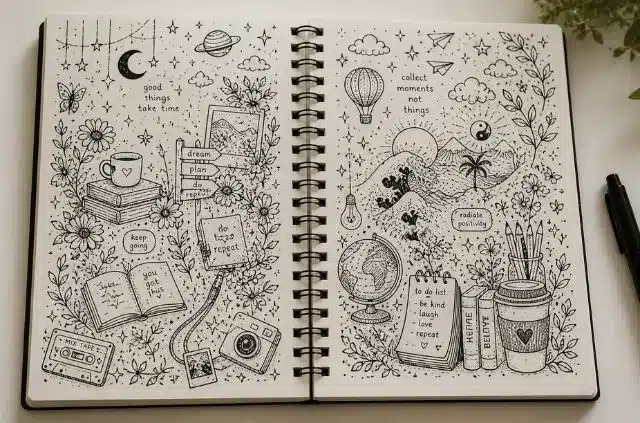
Doodle art is a creative form of drawing made using simple lines, patterns, and shapes. It can look messy or detailed, but it always feels natural and expressive.
Doodle art is popular because:
- It is easy to start
- No special skills are required
- It helps in relaxation and stress relief
- Anyone can create unique designs
History of Doodles (Where Did Doodling Start?)
Doodling may be one of the oldest forms of art known to mankind, due to the fact that it represents the inherent need in humans to visually create and demonstrate ideas. The term “doodle” is thought to come from the term “dudeln,” a German word that means “to play” or “to mess around.” In addition, drawings in the margins of books, on cave walls, and in personal journals have been discovered dating back to ancient civilisations. Doodlers like Leonardo da Vinci and Michelangelo used doodling as a preliminary method of exploring and developing their creative ideas. Their sketchbooks also show how spontaneous marks can develop into meaningful art—a creative approach seen in the work of many famous doodle artists from different periods and styles. During the 20th century, popular culture helped doodling take new forms, with simple drawings developing into successful cartoon characters such as Mickey Mouse and Snoopy. Doodling remains an enjoyable activity and a respected way of thinking, creating and expressing oneself.
Why Do People Doodle?
Doodle to help you concentrate, relieve stress, or explore your feelings while bored or distracted. Doodling helps keep your brain engaged while improving your ability to think.
Key Reasons:
- Increased concentration/retention:- Doodling provides an outlet for your brain, allowing you to process information more clearly whether you’re in a meeting or lecture.
- Reduced stress:- Doodling serves as a calming technique by providing an escape from stress and anxiety.
- Increased creativity:- Doodling stimulates your brain’s ability to generate new ideas, thus enhancing problem solving skills.
- Demonstrates emotion:- The shapes/lines you create may be indicative of your mood, feelings, and personality traits.
- Improved understanding:-Doodling helps your brain build relationships between visual and creative thinking, making complex concepts easier to comprehend.
- Doodle notes (learning support):- Doodle notes combine simple drawings with written information, helping people understand and remember ideas more easily while studying or taking notes. A similar approach can be used in a bullet journal, where small doodles, icons, and simple illustrations can make everyday notes and plans more creative and engaging.
Types of Doodle Drawings
There are many styles of doodle drawing, such as:
Main types of doodle drawing:
- Abstract doodles – random shapes, lines, patterns
- Geometric doodles – circles, squares, triangles, repeating shapes
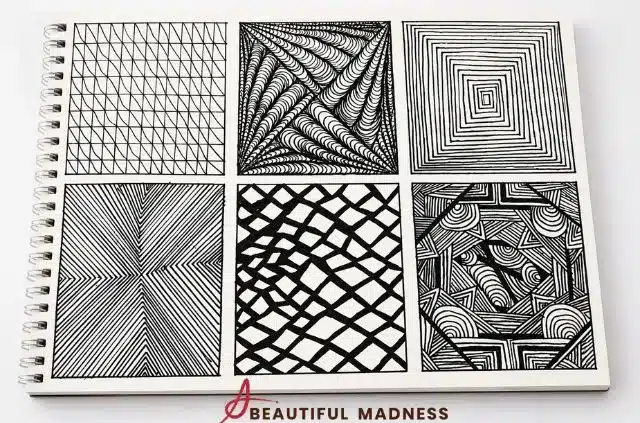
- Illusion doodles – 3D effects, optical illusions, impossible shapes, and patterns that create the appearance of depth or movement.
- Character doodles – faces, cartoons, funny figures
- Floral doodles – flowers, leaves, plants designs
- Animal doodles – cats, dogs, birds, bunny, etc.
- Lettering doodles – decorated words and alphabets
- Mandala doodles – circular and symmetrical patterns
- Object doodles – everyday things like cups, books, phones and breakfast doodles
- Scene doodles – small stories or mini landscapes
- Emotional doodles – mood-based shapes showing feelings
- Zendoodle drawing – repetitive patterns, flowing lines, dots, calming decorative designs
- Mindful doodles – slow drawing, stress relief, relaxation-focused patterns
Doodles can also follow a seasonal theme instead of appearing completely at random. A page of seasonal summer doodles might combine sunshine, tropical fruit, flowers, beach icons, seashells, and vacation memories into one fun, cohesive sketchbook spread.
Easy Doodle Drawing Ideas (Beginner Friendly)
If you are just starting, try these simple doodle ideas:
- Hearts and stars
- Smiley faces
- Clouds and sun
- Flowers and leaves
- Random patterns and lines
Start small and keep practicing. There is no right or wrong in doodle art
Doodle vs Drawing (What’s the Difference?)
Doodling is something you do without much thought, while drawing has an intention behind it when being created. Doodling happens when you are in a situation where you are bored – for example, in class or meetings. There is no way for doodling to be right or wrong; it serves to create an outlet for some of your energy and relieve stress while thinking about things (or concentrating and being more creative) at the same time.
Drawing, on the other hand, is done on purpose, with focus and intent, by either looking at what you see and creating it, or by thinking about what you want to create and then drawing that out. The goal of drawing is to be able to clearly communicate an idea, form or concept through the use of shape, image, or form.
Doodling and drawing involve marking things, but they are very different activities. Doodling is free and unstructured, while drawing is structured, and has a purpose to it. Doodling can also serve as a warm-up exercise for drawing by allowing you to become accustomed to using both hands in an easy and creative manner.
Also Read: Kids Art Activities
FAQ
1. What is a doodle in simple words?
A doodle is a quick and simple drawing made without planning.
2. Is doodling good for the brain?
Yes, doodling helps improve focus, memory, and reduces stress.
3. Who invented doodling?
No single person invented doodling, but people like Leonardo da Vinci used it in their notes.
4. How to draw doodles for beginners?
Start with basic shapes like circles, flowers, and simple patterns. Keep your hand relaxed and draw freely without worrying about perfection.