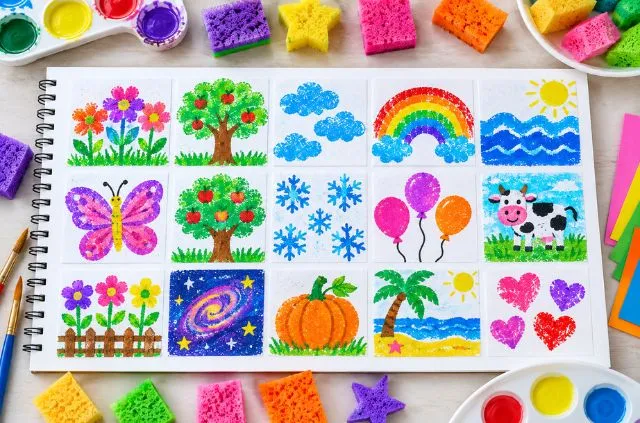
Sponge painting is one of those simple art activities that kids can enjoy without needing perfect drawing skills. With a few sponges, some washable paint, and paper, they can create flowers, clouds, rainbows, animals, and colourful scenes.
If you are looking for more simple projects to try, you can also explore these Kids Art Activities for a mix of painting, crafting, drawing, and DIY ideas.
What Is Sponge Painting?
Sponge painting is a painting technique where children use a sponge instead of a traditional paintbrush. They dip the sponge into paint and gently press, dab, or stamp it onto paper to create different shapes and textures.
It is especially fun for younger children because there is no need to worry about drawing perfect lines. A simple sponge can become a flower petal, fluffy cloud, tree leaf, or even an animal.
What You Need for Sponge Painting
You do not need many supplies to get started. Gather:
- Washable, child-friendly paints
- Clean kitchen or craft sponges
- White or coloured paper
- A paper plate or paint palette
- Scissors for cutting sponge shapes
- Apron or old clothes
- Newspaper or a washable mat for the table
For younger children, an adult should handle scissors and supervise the activity.
15 Easy Sponge Painting Ideas for Kids
Here are some simple sponge painting projects that children can make with basic materials.
1. Sponge Flower Painting
Turn a small round sponge into a flower-making tool. Dip it lightly into paint and press it onto the paper to create flower heads.
Add green stems and leaves with a paintbrush or marker. Try different colours to make a whole sponge-painted garden.
2. Sponge Tree Painting
Paint a simple tree trunk first, then use a sponge to create the leafy canopy.
Children can use different shades of green for a fuller-looking tree. For an autumn version, swap the green paint for yellow, orange, and red.
3. Sponge Cloud Painting
Cut or use a small sponge with a rounded edge and dab white paint onto blue paper.
Layer several dabs together to create fluffy clouds. Kids can then add a sun, birds, rainbows, or a little landscape underneath.
4. Sponge Rainbow
A sponge can create a fun textured rainbow without needing perfect brush strokes.
Use separate sections of a sponge for different colours, or let children stamp each colour one at a time. Add fluffy cotton-ball clouds around the ends for extra texture.
5. Sponge Ocean Waves
Use shades of blue and white to create an ocean scene.
Dab darker blue across the bottom of the page and add lighter blue and white paint over the top. Children can finish their picture with fish, boats, shells, or a sunny sky.
6. Sponge Butterfly Painting
Draw a simple butterfly outline and let children fill the wings with sponge prints.
Try two or three colours and layer the prints to make patterned wings. Add the body and antennae when the paint dries.
7. Sponge Apple Tree
Paint a tree trunk and branches, then use a small sponge to stamp green leaves around them.
Add little red dots for apples. This is an easy way to turn simple sponge prints into a complete picture.
8. Sponge Snowflake Painting
For a winter project, use white or pale blue paint on dark paper.
A small sponge can create the centre of each snowflake, while children can add thin lines with a paintbrush or cotton bud.
9. Sponge Balloon Painting
Use small round sponge pieces to stamp colourful balloons across the page.
Once the paint is dry enough, draw strings underneath each balloon. Children can make a birthday picture with lots of different colours.
10. Sponge Farm Animal Painting
Use sponge shapes to create simple farm animals.
A circle can become a sheep’s body, while smaller sponge prints can make chickens, cows, or pigs. Add faces, legs, ears, and tails with a marker or paintbrush.
11. Sponge Garden Painting
Create a colourful garden using different sponge shapes.
Stamp green paint for leaves, bright colours for flowers, and smaller dots for flower centres. Kids can add butterflies, bees, grass, and a little garden path.
12. Sponge Galaxy Painting
For a space-themed activity, start with dark blue, purple, or black paper.
Dab different shades of paint across the page with a sponge. Add tiny white dots for stars and draw planets, moons, or rockets once the background is dry.
13. Sponge Pumpkin Painting
Use orange paint and a rounded sponge to make pumpkin shapes.
Add a small green stem and some leaves. Kids can turn their pumpkins into a Halloween scene by adding a moon, stars, or a friendly black cat.
14. Sponge Beach Scene
Create a beach using blue, turquoise, yellow, and sandy colours.
Use a sponge to dab the water and sand, then add a sun, clouds, beach umbrella, shells, or a little boat.
15. Sponge Heart Painting
Cut a sponge into a simple heart shape and let children stamp colourful hearts onto paper.
This can become a lovely Valentine’s Day project, Mother’s Day craft, or homemade card. Try overlapping different colours to create a playful pattern.
Tips for Better Sponge Painting
A few simple tricks can make sponge painting easier and more enjoyable.
Use a Small Amount of Paint
Too much paint can make the sponge prints messy. Encourage children to dip the sponge lightly and press it onto the paper.
Try Different Sponge Shapes
Cut sponges into circles, squares, triangles, hearts, or other simple shapes. Each shape can create a completely different print.
Layer the Colours
Let one layer dry before adding another when you want clearly defined colours. For softer effects, children can experiment with overlapping wet colours.
Let Kids Experiment
Sponge painting does not have to produce a perfect picture. Let children try stamping, dabbing, dragging, and layering the paint to see what happens.
What Age Is Sponge Painting Good For?
Sponge painting can work for toddlers, preschoolers, and school-age children, with the activity adapted to their age.
Toddlers: Keep the activity simple with large sponges and washable paint.
Preschoolers: Let them experiment with different shapes, colours, and simple pictures.
Older children: Encourage them to create complete scenes, combine sponge printing with drawing, or experiment with colour mixing and textures.
Always choose age-appropriate, non-toxic art supplies and supervise younger children.
Final Thoughts
Sponge painting is an easy way to let kids explore colour, texture, shapes, and creativity without needing complicated art supplies. A simple sponge can become a flower, cloud, tree, butterfly, balloon, or anything else they can imagine.