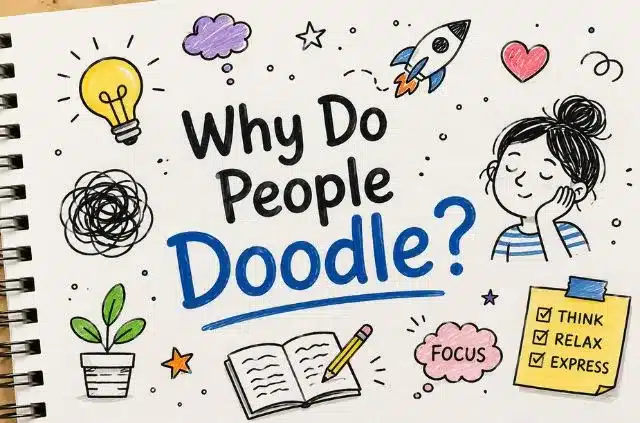
Have you ever wondered why people doodle during school lectures, phone calls, or long meetings without even realizing it?
Yeah. Most people do it.
I used to doodle constantly during school lectures. Not artistic stuff either — just random spirals, cubes, arrows, and those impossible 3D shapes everyone somehow learns to draw. These kinds of sketches can turn simple lines into visual illusions, especially when you experiment with depth, perspective, and repeating patterns.
Turns out, there’s actually a reason our brains do this.
And no, it’s not always because we’re distracted.
What Science Says About Doodling
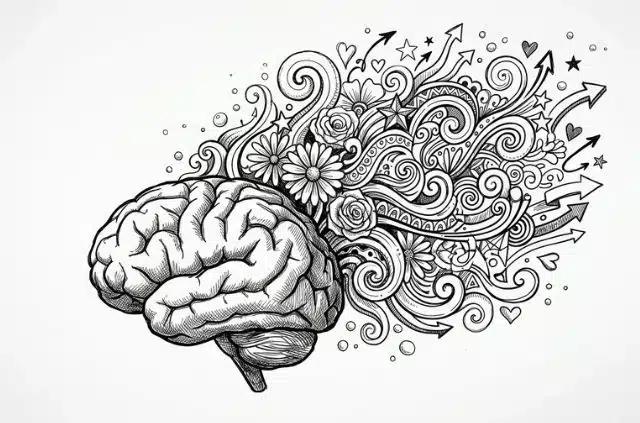
Psychologists have been studying doodling for years, and one of the best-known researchers, Jackie Andrade, found that simple absent-minded doodling may actually help people stay focused during boring tasks and improve memory in some situations.
So those random scribbles in the corner of your notebook? They may be doing a lot more inside your brain than you think.
What is Doodling?
It is drawing without consciously trying to draw.
Most of the time it happens unconsciously when the person is listening to someone else talk. Some of the most common places where you can find yourself doodling include: during phone calls; during meetings; in classes; and when you are pretending to listen to someone describe a really boring process or idea.
In addition to being unconscious, doodles tend to be created with the same intent over and over again. For example, one of my friends created dozens of tiny eyes that covered every margin of all of his notebooks.
Unlike real art, doodling is never planned out. You would never sit down at your desk in the morning and specifically say, “I think I’ll make 12 incredible spiral doodles during class today.”
And if you actually want to practice doodling intentionally, these beginner-friendly tips on how to draw doodles can make the process much easier.
Why Do People Doodle?
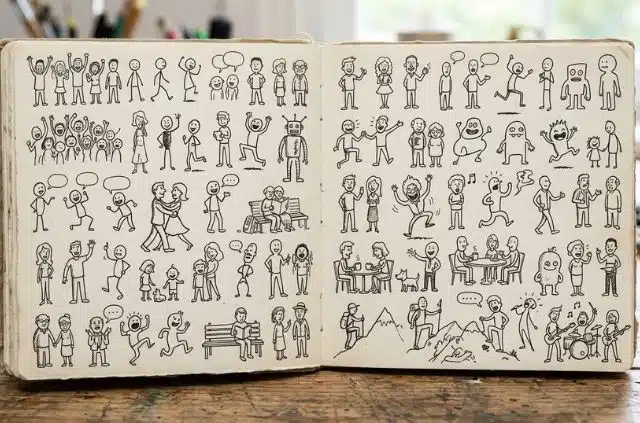
Because your mind becomes bored faster than expected (the brain can become bored quickly).
Humans have difficulty concentrating on monotonous, non-stimulating tasks (like sitting through a lengthy 40-minute meeting). Eventually your physical body is in one location but your mental state is often thinking about what to have for supper or recalling embarrassing events from the year 2017.
Doodling appears to reduce the feeling of losing focus entirely. It allows your mind to do a small side task that is not going to totally distract you, but will hold a portion of your interest awake. Similar to giving a restless child a toy to play with while you are trying to have a conversation. Your mind needs stimulation, and doodling gives it the necessary level of stimulation.
Related Article: Mindfulness Art Activities
That’s why human doodle most during:
* lectures
* phone calls
* waiting rooms
* meetings that should’ve been emails
* passive listening situations
Research from the University of Waterloo (Canada), however, has produced some interesting results. Free-form doodling can keep you alert, however, by drawing something directly related to what you are learning, you can double the use of your mental ability and memory of that subject matter. Therefore, instead of doodling random things, try doodling quick and rough sketches related to the subject matter you are learning.
This is one reason visual learners often enjoy creating doodle notes while studying because combining drawings with information can help the brain remember concepts more easily.
The Psychology Behind Doodling
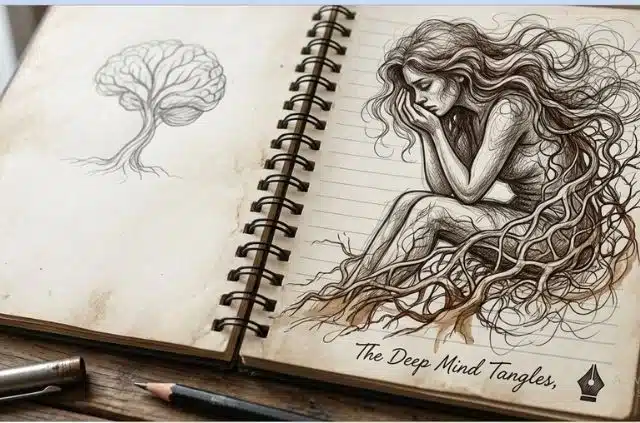
Psychologists speculate that doodling may be related to both the act of daydreaming or focusing on a primary task at hand.
While some of your brain is engaged with the primary task, another part is busy creating simple patterns and movements.
This balance may be one reason why doodlers feel relaxed doing so.
Experts believe that the repetitive motion associated with drawing has a calming effect on the brain due to its predictability and lack of pressure. And there are similar benefits to other low-pressure repetitive activities such as coloring, knitting, or tapping your fingers on an object repeatedly.
Additionally, this may help to explain why many people doodle when they are experiencing emotional distress, including:
- stress
- anxiety
- restlessness
- emotional overwhelm
- mental fatigue
Sometimes the brain simply needs movement and stimulation.
Doodling provides an easy outlet for that energy.
This calming effect is one reason practices like mindful doodling have become increasingly popular for stress relief and mental relaxation.
The Significance of Neuroscience
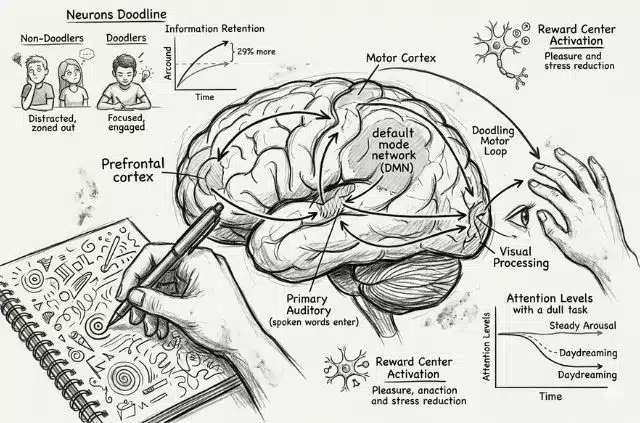
Neuroscience is a fascinating area and provides a completely unique perspective of this entire story.
Researchers claim that doodling involves many different brain systems at the same time and that these systems are involved in:
Active movement
Attention
Imagination and creativity
Mood regulation
They also suggest that the relationship between doodling and the brain’s Default Mode Network (DMN) is one of the best possible examples of how doodling might be related to the DMN.
The DMN is active when people are:
Daydreaming
Imagery/vision
Internal self-reflection
Being imaginative
Because of this, it is not uncommon for doodling (or sketching) to in turn spark a random creative thought or idea that seemingly comes out of nothing.
Although your doodling may make your mind look as if it is distracted, your brain may still be working away on processing the information you have drawn or sketched in the background.
Common Types of Doodles and What They Reveal About Your Mind
| Doodle Type | Psychological Meaning | Possible Interpretation in Mind |
| Spirals or Circular Doodles | Mental processing & emotional flow | Indicates deep thinking, problem-solving, or a need for mental calmness and balance |
| Boxes, Grids, and Geometric Doodles | Structure, logic, and control | Suggests analytical thinking, desire for order, or trying to organize thoughts in a chaotic situation |
| Eyes and Face Doodles Meaning | Social awareness and emotional observation | May reflect curiosity about people, self-awareness, or emotional evaluation of surroundings |
| Flowers, Hearts, and Nature Doodles | Emotional expression and positivity | Often linked with calm mood, affection, creativity, or romantic and positive emotions |
| Arrows and Line Doodles | Direction, goals, and focus | Represents ambition, decision-making, forward thinking, or concern about life direction |
| Cloud and Dreamy Doodles | Imagination and mind-wandering | Suggests daydreaming, creativity, or mental escape from stress or boredom |
| Animal Doodles Meaning | Emotional instincts and personality reflection | May indicate sensitivity, freedom-seeking behavior, or connection with nature and instincts |
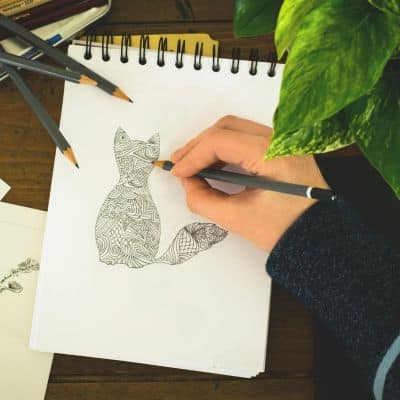
Some people enjoy drawing playful animal sketches like simple cat doodles, while others prefer making funny and chaotic silly doodles filled with random characters and weird expressions.
If you enjoy aesthetic or relaxing designs, soft floral sketches and easy flower doodles are often one of the easiest ways to begin doodling without pressure.
Food-themed doodles are another beginner-friendly option because they’re made from simple, familiar shapes. Try these breakfast doodle ideas if you’d like an easy collection of fun food illustrations to draw.
Why People Doodle When They Are Bored
One interesting thing about doodling is that it appears most often during moments of mental under-stimulation.
That is why students constantly fill notebook edges with random sketches during long classes.
In fact, many people specifically search for easy doodles to draw when bored in class because repetitive sketching helps pass time while keeping the brain lightly engaged.
And honestly, almost everyone has done it at some point.
Doodling Does Not Require Artistic Talent
One of the best things about doodling is that almost anyone can do it. Although no special artistic training is required, the work of famous doodle artists shows how simple lines, shapes and spontaneous ideas can gradually develop into a distinctive creative style.
If you’re not sure what to draw next, seasonal themes are an easy place to begin. Browsing summer drawing and doodle prompts can inspire simple sketches of sunshine, flowers, fruit, beach scenes, and vacation memories while still leaving plenty of room for your own creativity.
You do not need:
- expensive supplies
- professional art training
- perfect technique
- artistic confidence
Most doodles are simply:
- shapes
- lines
- arrows
- flowers
- Leaf
- faces
- random patterns
Even very simple sketches can feel relaxing and enjoyable.
If you ever feel stuck, exploring different cool doodle ideas can help spark creativity and make doodling feel less intimidating.
Conclusion
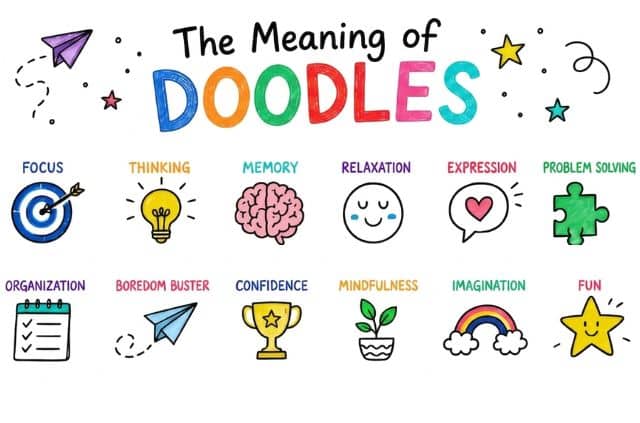
Although doodling might seem like nothing but simple scribbling, psychology and neuroscience provide evidence to indicate that there is much more going on with our brains than meets the eye.
Research has revealed that doodling can:
- aid in maintaining attention
- help reduce feelings of mental fatigue
- assist with recalling past events
- foster an increase in creativity
- provide emotional comfort during hard times
Therefore, next time you find yourself doodling spirals or random shapes on a notebook page, keep this in mind:
Your mind is probably not even being distracted by your doodles, but just trying its best to keep its creativity alive and stay stimulated via this very unique means of expression.
Thus, doodling does not mean you are wasting your time – your brain is likely busy working creatively behind the scenes.
Frequently Asked Questions About Doodling
Some people doodle more because they get bored easily, think visually, or find it easier to focus when their hands are moving.
Anyone can doodle — children, students, adults, or even people who say they cannot draw.
Doodling often happens in classrooms, offices, meetings, phone calls, and notebooks during idle moments.
Doodling does not reveal a person’s exact personality, but it may show habits like visual thinking, creativity, or a need to stay focused during passive tasks.
Not necessarily. Many people doodle without having Attention deficit hyperactivity disorder. It can be a common habit for anyone who feels bored, distracted, or likes keeping their hands busy.
Children often draw to express emotions, ideas, and imagination. Psychologists believe drawing can also help children process what they see and feel.
A doodle is a simple drawing made absent-mindedly while a person’s attention is focused on something else.
No, doodling is usually very simple. Most doodles are just basic shapes, lines, or patterns.
Doodling may help with focus, relaxation, memory, and creative thinking.
No. Drawing is usually intentional, while doodling often happens automatically without planning.
No. People can doodle on any paper, notebook, sticky note, or even the edge of a receipt.
A pen or pencil is usually enough. Some people also use markers or colored pens, but nothing special is required.
Common doodles include stars, flowers, faces, arrows, spirals, cubes, and random patterns.
Start by drawing simple shapes like circles, lines, leaves, or easy zendoodle patterns without worrying about making them perfect.